TEN IMPORTANT THINGS YOU NEED TO UNDERSTAND ABOUT PROPERTY TAXES AND AMENDMENT 3
- Property tax, consisting of ad valorem and non-ad valorem taxes, is paid annually.
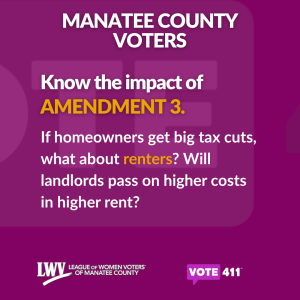
- We all pay property taxes, either directly as an owner or indirectly as renters.
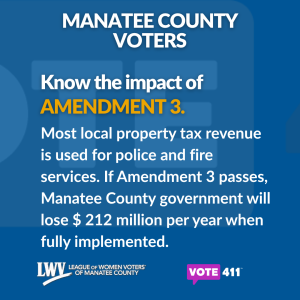
- Property taxes pay for public safety and other community services.
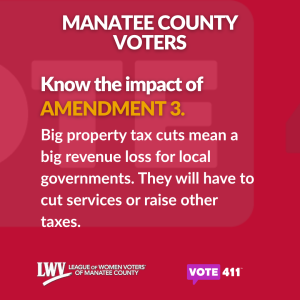
- Severely reducing property taxes will not make life cheaper, as costs will shift somewhere else.
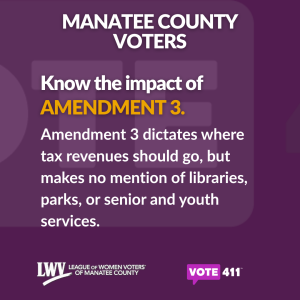
- Community services will likely be reduced or eliminated.
- Amendment 3 affects ad valorem taxes. Non-ad valorem taxes or fees will increase or new ones imposed.
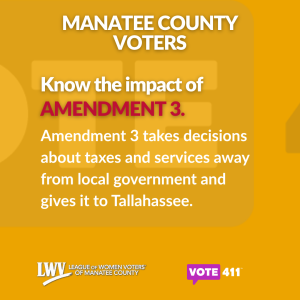
- The state legislature will dictate how local tax dollars are spent, not local government.
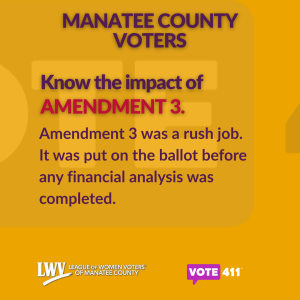
- Amendment 3 passed the Legislature and was signed by the Governor before any fiscal impact or financial analysis was completed.
- The Florida Legislature has made no guarantees or provisions to replace any lost city or county revenue under Amendment 3.
- Tax policy needs flexibility to change with changing conditions and emergencies; constitutional amendments eliminate that flexibility. Any correction will be slow, rare, and extremely difficult. The harm will be permanent.
COMMON MISCONCEPTIONS ABOUT AMENDMENT 3
“Property taxes are like paying rent to the government. Once you own your home, you shouldn’t have to keep paying for it.”
Paying off a mortgage ends your obligation to a private lender. It has nothing to do with the ongoing local services every homeowner relies on — calling 911 for a burglary, a heart attack, or a house fire; driving on local roads; depending on the infrastructure that delivers your water and power; using neighborhood parks. Property taxes fund the services that bring added value to homes and make communities desirable places to live. The real question: why should your neighbor pay for those services on your behalf?
“We’re in an affordability crisis, and this proposal offers real relief.”
Floridians are squeezed — at the gas pump, at the grocery store, and in the housing market. That pressure is real. But cutting property taxes doesn’t eliminate the cost of police, fire, water, or roads. It shifts that cost to higher fees, sales taxes, and special assessments that every Floridian — renters and homeowners alike — will feel. A tax cut that quietly becomes a fee hike isn’t relief.
“The only people opposed to this proposal are the ones who work in local government.”
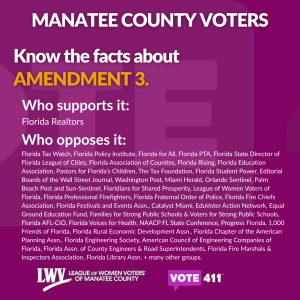
That isn’t accurate. Concerns have come from all three major credit rating agencies, independent tax policy experts, university researchers, and conservative voices who typically support tax cuts. When credit analysts and fiscal conservatives are sounding the same alarm as local officials, this is no longer a “local government” issue — it’s a Florida issue.
“There’s more than enough waste in government to absorb this tax cut.”
Every city and county is different, but they all share one thing: they are required by law to adopt a balanced budget through a transparent process, with public notice, public hearings, and direct public input. Unlike budgets shaped behind closed doors at higher levels of government, your local property tax budget is the most citizen-driven process in all of public finance. If you want a say in how the money is spent, you have a seat at the table — and a vote at the ballot box.
“This is just fearmongering.”
Concern grounded in data isn’t fearmongering — it’s math. The proposed exemption would reduce the largest local revenue source by billions of dollars statewide, and that gap has to be filled somewhere. Cities aren’t speculating; they are doing the work every city is required to do — modeling budgets, projecting service impacts, and being transparent with residents about what’s on the table. Sounding the alarm before the fire isn’t fearmongering. It’s the job.


